
Think about how many different ways money can enter one of your closings. A buyer sends earnest money one way at the start, then weeks later needs to move cash to close a completely different way. Somewhere in between, an agent chimes in with their own suggestion, a lender mentions a preference, and the buyer, trying to be helpful, asks whether they can just Venmo the earnest money to speed things up. Every one of those moments is a separate decision about where money should go, and every separate decision is a door a fraudster can walk through.
That is the real problem with how payments usually work in a closing.
It isn't that any single method is catastrophic. It's that there are too many of them, arriving at different times, explained by different people, with no consistent place the buyer is taught to trust.
For a title company, the fix is not a better set of instructions.
Why Scattered Payment Methods Are a Title Company's Problem
When a buyer asks "how do I pay my earnest money," most title companies answer the question as it comes up, one file at a time.
One buyer gets emailed wire instructions.
Another drops off a check.
A third might call in to the receptionist and simply get told to coordinate with their closer.
Each answer is reasonable on its own, but together they create a workflow with no fixed shape, and that shapelessness is the vulnerability.
A buyer who has no consistent expectation for how payment works has no way to recognize when something is wrong. If earnest money can be paid three different ways, then a fourth way, invented by a fraudster, doesn't feel out of place. The buyer isn't being careless. They were never given a single pattern to measure against.
This is the same dynamic behind most anti-fraud tools failing to protect title companies: the risk isn't a missing tool, it's a workflow with too many openings.
And when a payment goes wrong, the consequences don't stay with the buyer. A family that loses its earnest money or its cash to close doesn't blame the method they were told to use. They blame the closing, and the company that ran it. For a title company, inconsistent payment handling is not a client convenience issue. It's a liability sitting quietly in the workflow until the day it isn't quiet.
How Payment Confusion Turns Into Wire Fraud
Payments are where the money actually is, so payments are where fraudsters concentrate. The attack rarely requires breaking into anything. It requires a buyer who is unsure of the right way to pay, and a fraudster who supplies a confident, well-timed answer.
The Earnest Money Window Opens the Door Early
Earnest money comes due near the start of a transaction, before many buyers have settled into a rhythm with your processes. That early uncertainty is exactly what a fraudster wants. A convincing message about where to send the deposit, arriving right when the buyer expects one, can redirect funds before anyone has reason to double-check.
Cash to Close Is the High-Value Target
The largest transfer in the transaction is cash to close, and it arrives under deadline pressure at the end, when everyone is moving fast. A buyer who has already paid earnest money through one channel, then receives cash-to-close instructions through a different one, has no way to know which was legitimate. The inconsistency itself is the weakness a fraudster exploits, and it's one of the highest-risk moments in every closing.
Every Extra Payment Path Is Another Thing to Imitate
The more ways money can legitimately move through your closings, the easier it is for a fraudulent path to blend in. Each channel a buyer might be asked to use, wire from an email, check to an address, a link from a third party, is one more thing a criminal can convincingly impersonate.
Fewer paths mean fewer things to fake, and this is a big part of why. email is the riskiest way to coordinate a real estate transaction.
Why One Portal for Every Payment Is the Stronger Model
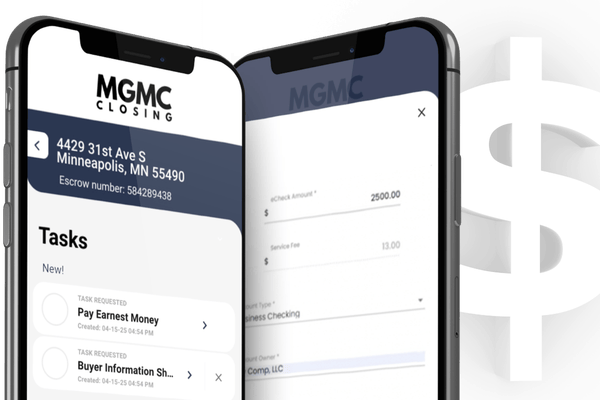
The alternative is not a stricter set of rules for buyers to follow. It's a single, consistent destination that makes the rules unnecessary. When a title company routes every payment through the same branded portal the buyer already uses for documents, updates, and identity verification, payment stops being a separate decision and becomes one more predictable step in a path the client already trusts.
One Consistent Destination Buyers Learn to Trust
When earnest money and cash to close both move through the same portal, the buyer only has to learn one thing: this is where money goes. Anything that asks them to pay somewhere else immediately contradicts what they know, which turns a fraudulent request from a plausible option into an obvious red flag.
Why this matters for title companies
You can't train buyers to evaluate every payment request on its merits, but you can train them to use one place. That single habit does more to protect closing funds than any warning ever will.
Payment That Lives Where the Rest of the Closing Already Does
A payment portal disconnected from the rest of the transaction is just one more tool, one more login, one more thing a buyer can confuse with something fraudulent. Payment is strongest when it sits inside the same environment as everything else in the closing, so the buyer never leaves the trusted path to move money.
Why this matters for title companies
Consolidating payment into your existing closing workflow means there's no separate destination for a fraudster to mimic and no moment where the buyer steps outside your control to pay.
Identity Confirmed Before Money Moves
Routing payments through your portal also lets verification happen where it belongs, before funds change hands rather than after. When the same environment that confirms a buyer's identity is the one that handles their payment, you close the gap between "we think this is the right person" and "the money is already gone."
Why this matters for title companies
Payment and identity belong together. Handling them in one place is what lets you verify a buyer's identity without slowing the closing down while still protecting every dollar that moves.
Scattered Closing Payments vs. One Branded Portal
|
In the closing |
The risky way (scattered payment methods) |
The safer way (one branded portal) |
|---|---|---|
|
Earnest money |
Wire, check, or third-party app, case by case |
Paid through the portal the buyer already uses |
|
Cash to close |
Instructions sent separately, often by email |
Same portal, same predictable path |
|
What the buyer learns |
No consistent rule for how to pay |
One destination for every payment |
|
A fake payment request |
Blends in with the usual variety |
Contradicts the one rule the buyer knows |
|
Identity check |
After funds have moved, if at all |
Before money changes hands |
|
If something goes wrong |
Title company absorbs the blame |
Fewer paths, far less exposure |
How CloseSimple Helps Title Companies Route Every Payment Through One Portal
CloseSimple was built for title and escrow teams that want money to move the same predictable way every closing, through one branded portal their clients already trust.
With CloseSimple, your title company can:
- Collect earnest money and cash to close inside the same branded portal your clients use for the rest of the closing
- Send every payment-related message from your own web domain, not ours, and from a unique phone number in your local area code
- Verify the identity of buyers and sellers before any funds move
- Keep wire instructions out of email entirely, released only through authenticated access
- Give buyers one consistent destination for every closing task, so a request to pay anywhere else stands out
- Replace a patchwork of payment methods and vendor tools with one unified workflow
- Trigger secure steps directly from SoftPro, ResWare, or Settlor, so your closers don't juggle extra tools
CloseSimple removes the confusion that scattered payments create, by giving your clients one place to move money for the entire closing. When every payment lives in one branded path, a fraudulent request doesn't just get harder to pull off. It contradicts the one thing your buyer already knows to be true.

Related posts

Wire Instructions
A $240,000 Wire Fraud Loss: Anatomy of a Title Company's Process Failure
Fraud Prevention
How Criminals Are Using Deepfakes to Commit Wire Fraud in Real Estate
Fraud Prevention
What Is Wire Fraud in Real Estate Closings? A Title Company's Guide to Stop It

Fraud Prevention
HTTPS, Spoofed Links, and Your Title Company's Closing Portal: Why the URL Your Client Clicks Matters