
Earnest money fraud is one of those things that feels like it should be obvious when it happens, but in reality, it rarely is. Most title companies don’t catch it early because the first signs look completely normal.
A buyer asks where to send funds. An agent forwards a message to “help things move faster.” A client uses an old thread because it’s already open on their phone.
Nothing about that feels suspicious. But those “normal” moments are exactly where earnest money fraud tends to form.
Fraudsters know buyers are most vulnerable at the beginning of the transaction, before the workflow feels familiar and before the title company has fully established a predictable process. That’s when attackers quietly blend in.
Let’s walk through how it actually happens, and what title companies can do differently.
Why Earnest Money Is So Easy to Exploit Early On
Think about your own workflow: when does the buyer send earnest money? Usually in the very first stage of the transaction, before:
- the client understands your process
- the team sets communication expectations
- identity verification has happened
- one secure channel has been established
It’s a moment when the buyer is enthusiastic but inexperienced. They don’t know what “official” communication looks like yet.
If the workflow isn’t consistent right away, scammers use that window to slip in.
Have you ever heard a buyer say: “Can you just resend the instructions? I’m not sure which email is correct.”
That’s the moment when risk is highest.
Why Title Companies Often Don’t Catch These Attacks Early
Fraudsters don’t announce themselves, they imitate normal behavior. Here are the subtle patterns title companies often overlook:
- A buyer emails from an old thread
- A real estate agent forwards something the title team didn’t send
- A lender replies from a different email domain
- A buyer sees multiple “voices” from the title company
- Early communication happens in email before a portal is introduced
Each of these creates a small blind spot… and fraudsters look for blind spots.
If the buyer hasn’t yet learned a single “official path,” every message feels equally possible, including a fake one.
The Real Cost of Earnest Money Fraud Goes Far Beyond the Funds
Even when the money is recovered, the operational disruption can be intense.
|
Category |
Impact |
Estimated Cost |
|
Buyer Funds Diverted |
Immediate financial loss |
$10,000–$20,000 |
|
Recovery Process |
Bank recall + fraud documentation |
4–6 staff hours |
|
Team Disruption |
Closer + manager + agent + lender |
8–12 staff hours |
|
File Delays |
Extensions, rescheduling |
2–3 days |
|
Client Trust |
Anxiety, fear, frustration |
High |
|
Business Risk |
Agent/lender confidence shaken |
Long-term trust |
|
Opportunity Cost |
Other files slowed |
3–5 files |
These situations don’t just drain time, they drain trust. Ever had a buyer who almost fell for a scam? You can feel the fear in their voice… and that fear spreads to everyone else in the transaction.
How Earnest Money Fraud Quietly Forms Inside Title Workflows
Here’s how it typically plays out in real life, not in theory, but the way your team has probably experienced it before.
1. The Buyer Receives Instructions in Email Before the Workflow Takes Shape
Early in the file, someone sends instructions quickly “just to keep things moving.”
Or the agent forwards something they received.
Buyers latch on to the very first version they see, and scammers mimic that channel.
Ask yourself: If a buyer scrolled their inbox right now, would they know which message was the real one?
2. Agents Forward Threads That Were Never Meant to Be Shared
Agents want to be helpful, especially when buyers are eager to send funds. In the rush, they often forward:
- internal notes
- older versions of instructions
- messages with sensitive details
This unintentionally exposes the timing, tone, and structure of your process, exactly what scammers need to imitate you convincingly.
3. Buyers Use Old Threads or Old Attachments Without Thinking
Buyers rarely search for the newest message. They search for the first one they remember.
If your workflow doesn’t guide them clearly, they pick whichever link or PDF “looks familiar.”
Scammers know this.
They plant their messages in the exact spot buyers are likely to revisit.
4. Fraudsters Match Your Timing Perfectly
Attackers observe the title company’s rhythm:
- when you typically send updates
- how fast you reply
- what time of day instructions usually appear
Then they send their fake instructions at the exact moment your buyer expects them.
It doesn’t feel random. It feels accurate, and that’s why buyers fall for it.
5. Too Many Internal Voices Create Just Enough Confusion
Buyers may hear from:
- the closer
- the assistant
- the escrow team
- reception
- your accounting department
Even when your team is coordinated, buyers see a mix of names and tones, and scammers use this to their advantage.
When a fake message pops up, buyers assume, “Oh, this must be someone else from the title company.”
That assumption is where the damage starts.
How CloseSimple Helps Title Companies Remove These Early Vulnerabilities
CloseSimple prevents earnest money fraud by giving title companies a workflow where instructions, identity steps, and communication all funnel through one secure, predictable path, not scattered email threads.
Here’s what changes when title companies use CloseSimple:
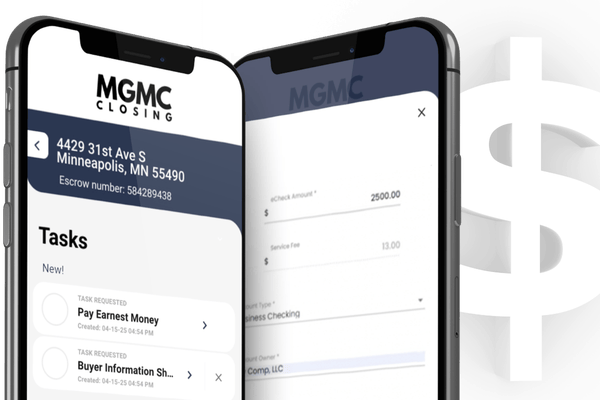
Buyers Start Inside the Portal, Not Email
From the first interaction, buyers enter a guided workflow, so they never default to older threads or forwarded messages.
Earnest Money Instructions Stay in One Secure Place
No attachments. No forwarded instructions. No crossed wires.
Everything happens within the title company’s portal. Never email.
Identity Verification Happens Before Any Payment Steps
If someone isn’t who they claim to be, they never reach the point where instructions appear.
Agents Don’t Need to “Forward Anything”
The workflow handles buyer guidance automatically, so well‑meaning shortcuts disappear.
Timing Becomes Predictable
Instructions show up only when the file hits the correct milestone, attackers can’t imitate what they can’t predict.
Every Communication Has the Same Sender Identity
Buyers stop seeing mixed voices and start trusting a single, consistent source.
CloseSimple removes the uncertainty that scammers rely on and gives buyers the clarity they need from the moment earnest money enters the conversation.
Want to Keep Earnest Money Movement Safe and Stress‑Free?
If your team has ever dealt with:
- buyers wiring from old instructions
- agents forwarding messages you didn’t expect
- clients asking “Is this the right email?”
- early confusion around where funds should go
…your workflow is giving scammers more space than you intend.
CloseSimple helps title companies create a secure, guided process that protects buyers at the exact moment they need it most.

Related posts
Fraud Prevention
Why Poor Communication Increases Fraud Risk in a Closing. A Lot.
Fraud Prevention
How Real Fraud Prevention Works Inside a Modern Title Workflow
Fraud Prevention
What Happens When Wiring Instructions Are Compromised? A Title Company’s Guide

Fraud Prevention
7 High‑Risk Steps in the Closing Process That Increase Fraud Exposure: A Guide for Title Companies