
.png)
Every real estate closing requires identity verification. But for title companies, the challenge isn't whether to verify, it's how to do it without turning a smooth closing into a frustrating experience for buyers, sellers, and agents.
Fraudsters insert themselves into the transaction by pretending to be the buyer, seller, real estate agent, or loan officer. And they succeed when the workflow gives them room to look legitimate. Title companies often avoid tightening identity checks because they worry it will frustrate clients, slow files down, or add tasks to the team’s workload. But the truth is simple: identity verification does not slow down closings. A broken workflow does.
This guide covers how title companies can verify buyer and seller identity quickly and accurately, and how to do it inside an existing title production workflow without adding friction or manual steps.
Why Identity Verification Feels Hard (It Shouldn’t Be)
Traditional identity checks feel slow because they rely on the wrong tools:
- Email threads are insecure and clients reply to at odd times
- Photo attachments that float across inboxes
- Phone calls and verbal verification that require perfect timing
- Third‑party links that clients forget to complete
- Multiple methods depending on the closer
These steps create delays, confusion, and inconsistency. What actually slows a closing down is:
- Chasing missing IDs
- Asking clients twice
- Reviewing unclear images
- Re‑verifying information from forwarded messages
- Investigating suspicious emails
A clean workflow solves this. When identity verification is built into the process itself, clients complete it faster, your team stays consistent, and fraudsters run into walls instead of openings.
Compliance Requirements Are Rising
Why Title Companies Must Verify Identity Consistently
Identity verification is increasingly tied to:
- AML requirements
- KYC standards
- OFAC checks
- Underwriter best practices
- Lender expectations
The biggest compliance failure is inconsistency. A predictable workflow eliminates that risk.
How to Verify Identity Without Slowing Down Your Closings: A 6‑Step Workflow
Below is a practical, modern, step‑wise identity verification process built for title companies that want security without adding friction.
1. Start Verification Immediately When the File Opens
Most verification delays come from waiting until later in the transaction. Modern workflows, like the CloseSImple embedded workflow, verify identity at step one because:
- Clients are most attentive at the beginning
- Fraudsters are not yet entrenched
- It prevents early data exposure
- It keeps the process moving with no downstream cleanup
- The earlier verification happens, the faster every future step becomes.
2. Deliver the First Client Message Through One Trusted Channel
The first communication sets the tone for the entire transaction. One welcome message via email from your web domain, not a 3rd party software vendors’ domain. Buyers and sellers should receive:
- One welcome message
- From your domain (not a third‑party vendor domain)
- Directing them to one portal
Clear, consistent communication removes confusion and teaches clients where all secure actions will take place. Every email that goes out from CloseSimple on behalf of a title company goes out from their domain, not the closesimple.com domain.
3. Use Portal‑Based Identity Verification (Never Email)
Email‑based identity checks slow the file down. Clients submit blurry or incomplete photos, and staff must review and correct everything manually.
Portal‑based verification is faster because:
- Clients can complete it on any device
- Photos and data remain in one secure space
- The workflow advances automatically
- Staff never review email attachments
- Fraudsters cannot intercept the process
Fast closings require predictable, secure communication—not inbox chaos.
4. Tie Verification to Milestones Instead of Manual Triggers
Identity verification should not depend on someone remembering to request it.
A modern workflow triggers verification automatically:
- When clients first log in
- Before document exchange
- Before wire instructions
- Before sensitive information is released
Automation ensures consistency and speed.
5. Keep All Verification Inside One Portal (Not Multiple Tools)
Closings slow down when clients must:
- Download apps
- Search for links
- Switch between tools
- Create extra accounts
- Guess which link is official
One portal eliminates confusion and reduces security exposure.
6. Automate the Follow‑Up
Most delays occur when clients forget to complete verification. Automation fixes this through:
- Reminder messages
- Deadline nudges
- Status updates
- Escalation notices
The file moves without staff chasing.
Comparison: Email‑Based vs Portal‑Based Verification
|
Verification Method |
Speed |
Security |
Staff Workload |
Client Experience |
Fraud Prevention |
|
Email‑Based Verification |
Slow |
High risk (spoofing, hijacking) |
Heavy manual review |
Confusing |
Fraudsters can slip into threads |
|
Portal‑Based Verification |
Fast |
Secure, enclosed workflow |
No manual review |
Clear and guided |
Fraudsters cannot gain access |
How This Works in a Real Closing
Slow, Outdated Workflow
- Email goes out requesting ID
- Buyer replies days later
- Image is unreadable
- Closer requests another photo
- Buyer forgets
- File stalls
- Fraudster slips into the email chain
Fast, Modern Workflow, Powered by AI-Identity Verification
- File opens
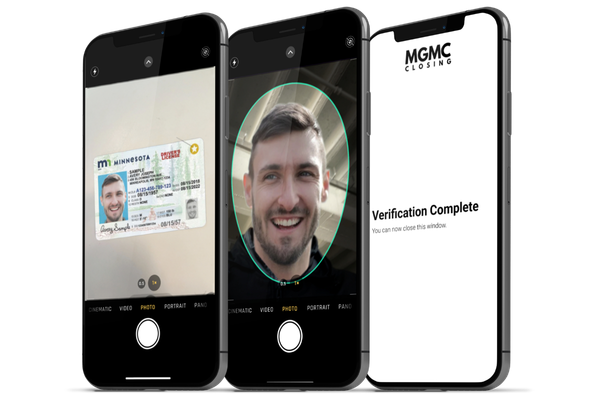
- Client receives a single portal link
- Verification triggers automatically
- Client completes it in minutes and AI scans the information
- Workflow advances instantly
- No manual review
- Fraudster never reaches an entry point
One workflow drags. The other accelerates.
Why This Approach Prevents Fraud
When clients know exactly where, how, and when verification happens, anything outside patterns becomes suspicious. Fraudsters rely on:
- Inconsistency
- Scattered communication
- Varying processes
- Email threads
A clean workflow removes all of that.
How Identity Verification Integrates With SoftPro and ResWare
Why TPS Integration Matters
Slow identity verification often comes from tools that sit outside your TPS. To keep closings fast, verification should:
- Trigger directly from the TPS
- Sync status instantly
- Advance tasks automatically
- Remove duplicate steps
- Reduce staff handling
Modern workflows fix “too many tools” by eliminating the fragmentation.
The ROI of Faster Identity Verification
The Cost of Doing Nothing
Manual identity verification creates hidden costs:
- Lost minutes per file
- Repeated follow‑ups
- Inconsistent processes
- Increased staff workload
- Higher fraud exposure
A unified workflow eliminates these friction points and strengthens your closing timeline.
How CloseSimple Helps You Verify Identities Without Slowing Down
CloseSimple does not add complexity to identity verification. It removes it. Inside CloseSimple:
- Verification begins the moment clients enter the portal
- No emailed photos
- No stray links
- Everything stays inside one branded experience
- Verification ties to workflow milestones
- Automated follow‑up keeps the file moving
- Staff avoid manual review
- Fraudsters lose their entry points
We make identity verification faster, clearer, and built directly into the workflow so clients complete it quickly and fraudsters cannot bypass it.

Related posts

Identity Verification
4 Identity Verification Failures That Put Title Companies at Risk of Impersonation Fraud
.png?length=350&name=5%20Hidden%20Payment%20Risks%20Inside%20Title%20Workflows%20(And%20How%20to%20Fix%20Them%20Before%20They%20Cost%20You).png)
real estate closing payments
5 Payment Errors In Closing Workflows That Cost Business
-1.png?length=350&name=7%20Reasons%20Buyers%20Get%20Confused%20During%20Closings%20(&%20Call%20You%208%20Times)-1.png)
Title Company Workflow
7 Reasons Buyers Get Confused During Closings (& Call You 8 Times)

Fraud Prevention
What Is Wire Fraud in Real Estate Closings? A Title Company's Guide to Stop It