
.png)
Most payment problems inside a closing don’t start with an obvious mistake. They start with small workflow cracks, a payoff that comes through the wrong channel, a routing number someone assumes was already confirmed, a document sent through email instead of a secure portal, or a timing delay that shifts disbursements by hours.
These moments don’t feel dangerous. They feel like “normal closing friction.” But inside a title workflow, these small inconsistencies can quietly turn into financial exposure, client confusion, and delayed closings.
Below are the five hidden payment risks embedded in many title workflows today, what they are, how they create risk, how they cause delays, and how modern workflows eliminate them.
Why Payment Risks Hide Inside Normal Workflow Activity
Payment errors tend to originate during:
- Busy volume periods
- Staff transitions
- Rushed updates
- High agent pressure
- Buyer or seller uncertainty
Because closings eventually settle, these early issues often go unnoticed. But money movement is unforgiving. A single workflow drift upstream becomes a much larger issue at the end, especially when payoff numbers, routing details, or lender instructions move through inconsistent channels.
What These 5 Payment Risks Have in Common
They are subtle. They are common. And they aren’t flagged until the very end of a transaction.
Collectively, they create:
- Misaligned payoff numbers
- Routing instructions taken from old emails
- Delayed disbursements
- Version mismatches
- Last‑minute scrambles
- Confused buyers and sellers
- Preventable liability
How Payment Risks Create Delays and Financial Exposure
|
Payment Risk Category |
How It Creates Confusion & Exposure |
How It Causes Closing Delays |
|
Payoff details via uncontrolled channels |
Wrong numbers, outdated PDFs, unverified sources |
Downstream payoff mismatches, last‑minute rewrites |
|
Missing confirmation steps |
Assumptions replace verification |
Disbursements paused until items are re‑checked |
|
Manual number re‑entry |
Human error under volume conditions |
Reconciliation delays, correction cycles |
|
Email‑based payment instructions |
Clients use old or forwarded versions |
Incorrect transfers or delayed wires |
|
Disbursement timing based on people |
Tasks shift due to workload |
Afternoon bottlenecks, missed bank windows |
Below we break down each risk in detail, along with how modern workflows (like CloseSimple’s) prevent them.
1. Payoff Information Arriving Through Uncontrolled Channels
Payoffs frequently arrive through:
- Forwarded emails
- Unverified attachments
- Agent messages
- Old threads
- Screenshots or PDFs lacking updated totals
How It Gets Exploited
Fraudsters slip into upstream communication, hacked agent inboxes, spoofed emails, forwarded threads, and disguise themselves within the noise.
How It Delays Closings
When payoff numbers don’t match:
- reconciliations stall
- funding pauses
- disbursements freeze
- closers must backtrack through email chains
Solution: How Modern Workflows Prevent It
A modern workflow:
- Pulls payoff details into one secure portal
- Removes emails from the process
- Ensures version consistency
- Logs updates in order
The payoff arrives clean, verified, and controlled.
2. Missing Confirmation Steps Before Disbursement
Teams often rely on habits to confirm:
- beneficiary names
- routing numbers
- updated payoff totals
- seller instructions
How It Gets Exploited
When confirmation isn’t required, fraudsters insert themselves into:
- old email chains
- forwarded attachments
- agent-driven messages
How It Delays Closings
Missing confirmations cause:
- paused disbursements
- emergency re-checks
- lender callbacks
- last‑minute stress
- missed funding windows
Solution: How Modern Workflows Prevent It
Modern workflows:
- Build confirmations into mandatory steps
- Require validation before the workflow advances
- Eliminate memory-based tasks
Nothing moves forward without verification.
3. Manual Re‑Entry of Numbers Between Systems
Teams still manually retype:
- payoff amounts
- commissions
- HOA totals
- seller proceeds
- routing numbers
How It Gets Exploited
Manual data movement enables:
- spoofed payoff updates
- mismatched numbers
- unnoticed changes
- upstream fraud disguised as “typos”
How It Delays Closings
Manual re-entry creates:
- arithmetic mismatches
- reconciliation cycles
- delays with lenders
- day-of-closing corrections
Solution: How Modern Workflows Prevent It
A modern workflow:
- Reduces manual data entry
- Centralizes updates in one portal
- Eliminates PDFs that need copying
- Keeps numbers consistent
Accuracy goes up. Delays go down.
4. Clients Receiving Payment Instructions Through Email
Clients often:
- search inboxes
- open old attachments
- follow forwarded versions
- ignore updated PDFs
How It Gets Exploited
Because email is easy to spoof, fraudsters:
- copy logos
- use similar sender names
- resend old instructions
- create fake “updated” PDFs
How It Delays Closings
If a client uses the wrong instructions:
- wires go to wrong accounts
- staff enter emergency mode
- funding halts
- everyone waits
Solution: How Modern Workflows Prevent It
Modern workflows:
- Remove instructions from email
- Deliver wire guidance through the portal
- Require identity verification before access
- Ensure clients always see the current version
Every client uses the right instructions.
5. Disbursement Timing That Depends on People, Not Workflow
When workflow timing depends on individuals:
- tasks shift to the afternoon
- payoff updates happen too late
- seller instructions come last-minute
- wires miss cutoff windows
How It Gets Exploited
Fraudsters know when teams are busiest, and send “urgent” fake messages at the exact moment when teams are stretched thin.
How It Delays Closings
Human timing shifts lead to:
- afternoon bottlenecks
- missed banking windows
- late wires
- reconciliation overflow
Solution: How Modern Workflows Prevent It
Modern workflows:
- Trigger time-sensitive steps automatically
- Ensure prerequisites are complete
- Keep timing consistent even during volume spikes
Closings stay on track, even when staff are overloaded.
Why These Hidden Payment Risks Matter More Than Ever
Payment movement inside a closing leaves no room for approximation. If one number or one document is off, the liability doesn’t disappear, it transfers.
Risks appear in three places:
- Upstream payoff misalignment
- Downstream disbursement timing
- Client confusion from email-based instructions
Most payment issues don’t begin at disbursement. They begin upstream in workflow inconsistency.
How CloseSimple Prevents Payment Errors Before They Happen
CloseSimple eliminates payment risks by creating a secure, automated workflow where payoff details, payment instructions, verification, and timing all move in a controlled environment.
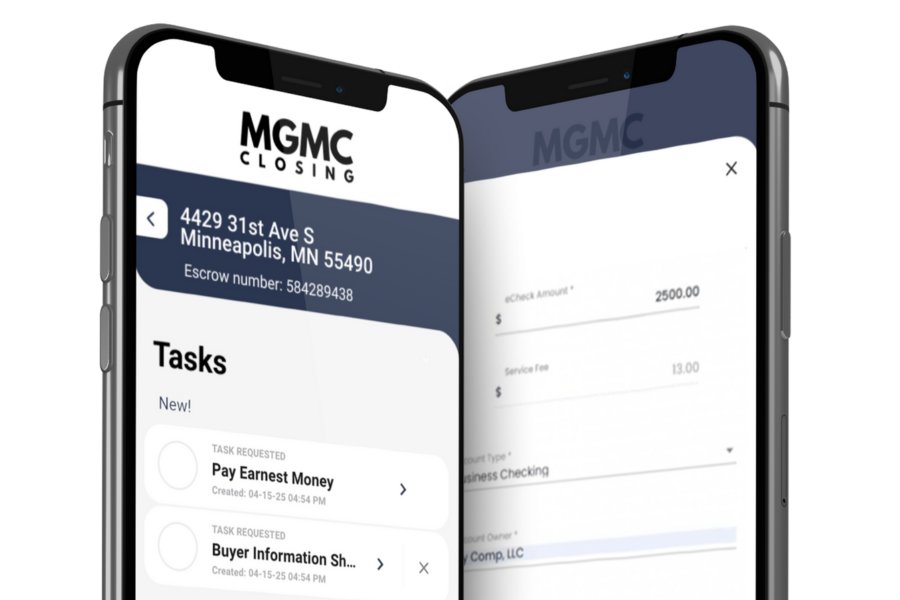
One Portal for All Payoff and Payment Instructions
Every payoff, update, and instruction stays inside a single secure portal, never through email.
Unified Communication Layer
All messages come from one domain with consistent branding, preventing confusion and spoofing.
Automatic Identity Verification Before Wire Instructions
Wire instructions unlock only after verification, blocking impersonation attempts at the most targeted stage.
Predictable, Automated Timing
Automated sequences ensure payoffs, reminders, and payment steps always happen on time.
Document Uploads and Payoff Updates Inside the Portal
Clients, real estate agents, and lenders upload everything in one place, eliminating attachment drift and manual review.
Milestone‑Triggered Disbursement Controls
Disbursements follow structured steps that prevent timing conflicts and ensure everything is verified before funds move.
A Single Source of Truth for All Payment‑Related Steps
Everyone sees the same instructions in the same place, reducing confusion and speeding the closing.
CloseSimple doesn’t fix payment errors, it prevents the environment where they form.
Ready to Eliminate Payment Risks From Your Workflow?
If you recognized any of the risks above, scattered payoff communication, email-based instructions, manual number entry, inconsistent timing, or late verification, your workflow is creating preventable delays and financial exposure.
CloseSimple helps title companies eliminate those risks by giving buyers, sellers, agents, lenders, and your internal staff one unified workflow, one communication channel, and one secure portal for every payment-related step of the closing.
If you're ready to see how we can remove operational friction from your workflow and speed up every closing:
We’ll walk you through exactly how CloseSimple helps title companies modernize communication, reduce workflow risk, and eliminate the delays that slow closings down.

Related posts
.png?length=350&name=How%20Title%20Companies%20Can%20Verify%20Identity%20Without%20Slowing%20Down%20(1).png)
Fraud Prevention
How Title Companies Verify Buyer Identity Without Slowing Down Real Estate Closings
.png?length=350&name=8%20Operational%20Risks%20in%20Title%20Workflows%20That%20Cause%20Closing%20Delays%20%20(&%20How%20to%20Prevent%20Them).png)
Title Company Workflow
8 Invisible Operational Risks Hiding in Every Title Workflow

Identity Verification
4 Identity Verification Failures That Put Title Companies at Risk of Impersonation Fraud
-1.png?length=350&name=7%20Reasons%20Buyers%20Get%20Confused%20During%20Closings%20(&%20Call%20You%208%20Times)-1.png)
Title Company Workflow
7 Reasons Buyers Get Confused During Closings (& Call You 8 Times)