

Real estate fraud used to require a specialized set of skills. Convincingly impersonate a party. Craft a spoofed email that survives scrutiny. Build a fake site that fools someone into logging in. Each of those tasks took time, and time was one of the industry's quiet defenses.
That's the defense AI has taken away. What used to require days of effort by a skilled criminal can now be produced in minutes by someone with a laptop and a subscription, and the output is often better than what an experienced fraudster could have made a few years ago.
The result is a shift in scale, not just tactics. Cyber-enabled fraud reached $13.7 billion in reported losses in 2024, according to the FBI's IC3, and deepfake scams alone increased 40% year over year according to security firm Entrust's 2026 Identity Fraud Report. Title companies sit at the intersection of large one-time transfers, tight deadlines, and predictable communication patterns, which is exactly the target profile these AI-powered scams are built for.
7 AI Scams Ramping Up Title Fraud
What follows is a working list of seven AI-enabled tactics landing on real closings right now, why each one works, and what a title workflow can rely on when human judgment is no longer reliably enough.
1. Deepfake Voice Impersonation of a Party
Given a few seconds of audio scraped from social media or a voicemail, a modern voice model can clone a person's voice well enough to deceive people who know them. In a closing, that means a fraudster can leave a voicemail for a closer sounding exactly like the seller, or call requesting a change to wire instructions with the seller's cadence, tone, even their small verbal habits.
Why it works on title companies: the industry's old "does it sound like them?" defense collapses. A closer with twenty years of experience cannot reliably distinguish a good voice deepfake from a real call under normal conditions.
What defends against it: identity confirmed at intake before any moment of pressure, callbacks that use the number captured when the file was opened rather than any number supplied in the suspect message, and wire instructions that live only behind authenticated access. For the full anatomy of how these attacks unfold and the defenses that hold up, the deepfake closing walks through how AI-generated impersonation is changing real estate fraud.
2. Deepfake Video on Verification Calls
Real-time video deepfakes have crossed from novelty into practical tool. A fraudster can now appear on a video call, in real time, as the seller, the buyer, or an agent, with facial expressions and lip sync convincing enough to pass a casual "get on a call and confirm it's really you" check.
Why it works on title companies: video was, for a while, the answer to voice-only impersonation. That advantage is eroding. Verification workflows that lean on "we can see them" are now themselves an attack surface rather than a reliable defense.
What defends against it: structural verification that doesn't rest on what the closer sees in the moment. When identity is confirmed at intake and any change to sensitive details requires a documented, out-of-band process, a convincing video call is no longer the last line of defense. Human eyes stop being the check.
3. AI-Generated Identification Documents
The image models available today can produce photorealistic driver's licenses, passports, and other government IDs that look correct at a glance, match the person supplying them, and pass casual visual review. Some pass more than casual review.
Why it works on title companies: many workflows still confirm identity by asking a client to email a photo of their ID. That method was already weak against basic photo editing. Against modern image generation, it's not a defense at all.
What defends against it: identity verification that goes beyond a submitted image, into methods that confirm the document is genuine and belongs to the person presenting it, rather than accepting whatever arrives in an email. Confirmation at intake, before any sensitive information moves, is what preserves the value of the check when the document itself can no longer be trusted at face value.
4. Synthetic Identities Assembled by AI
A synthetic identity is a composite person, real name from one source, real address from another, real Social Security or taxpayer number from a third, stitched together into a plausible file that can pass identity checks based purely on data. AI has made assembling and refining these composites much faster.
Why it works on title companies: the person doesn't exist, so the fraud isn't detected by anyone reporting a stolen identity. The composite can hold up through a closing on paper while the actual purchase or refinance is designed to redirect money to accounts the fraudster controls.
What defends against it: verification that confirms a live, present person tied to the identity, not just matching data points on a form. Synthetic identities depend on the check happening in the background of a form; live verification breaks that model.
5. AI-Drafted Phishing and Business Email Compromise
Phishing and business email compromise (BEC) have been the workhorse of real estate wire fraud for years. AI has quietly raised the ceiling on both. A fraudster who has compromised or spoofed an email account in the transaction can now use AI to draft messages that match the writing style of the person being impersonated, including subtle patterns like how they open a message, when they use exclamation points, and how formal they are with different recipients.
Why it works on title companies: the old signals that used to give away a phishing email, typos, awkward phrasing, generic salutations, are largely gone. A well-crafted AI-generated message reads like the person you know, because it was trained on the person you know.
What defends against it: the same structural moves that have always worked against BEC and phishing, now more important than before. Every closing message from your own company domain and phone number, so an outside sender stands out even when the impersonation is stylistically perfect. Wire instructions never delivered by email. Sensitive documents never sent as email attachments, which is a big part of why email is the riskiest way to coordinate a real estate transaction.
6. Fake Property Listings and Fabricated Ownership
AI image and text generation have made it easy to produce entirely fake property listings, complete with realistic photos, virtual tours, and property descriptions. Some listings advertise real properties the fraudster does not own; others advertise properties that don't exist at all. In either case, the target is a buyer who wires a deposit or closing funds before the fraud is discovered.
Why it works on title companies: while the initial deception happens outside your office, the transaction lands at a title company. The buyer's money often reaches your file before the ownership problem surfaces, and title companies are then involved in unwinding a mess that was seeded before they ever opened the file.
What defends against it: early identity and authority verification for the seller side of the transaction, careful review of the chain of title against the current claimed owner, and no exceptions for "urgent" transactions that skip standard checks. The pressure to move quickly is the fraudster's ally in these cases.
7. Cloned Title Company Websites and Portals
AI website generation has made it trivial for a fraudster to clone a title company's website, complete with matching branding, staff bios, and a fake client portal. Combined with a lookalike domain, the clone can appear in search results, in phishing emails, or in a spoofed link, and convince a client to enter credentials or upload sensitive documents into a system controlled by the criminal.
Why it works on title companies: the client has no fixed reference for what the real site looks like, especially early in a transaction. A clone that mirrors the real site at 95% fidelity is more than close enough for the average buyer to trust.
What defends against it: giving clients one branded destination they learn from the start of the closing, so a URL that isn't the one they've been using stands out. When every message in the closing points to the same authenticated portal, a link to a cloned site contradicts the pattern the client already knows.
The Pattern Underneath Every AI-Enabled Title Fraud
Look across the seven and the same shape shows up. Each attack takes something that used to be a signal of trust, a familiar voice, a real ID, a well-written email, a legitimate-looking website, and industrializes it. Each one works because the defense was perceptual: someone was supposed to notice something was off. And each one is now well past the point where any reasonable person can be relied on to notice.
That means the defense has to move from perception to structure. Not "notice the fake," but "design the workflow so the fake has nowhere to land." Every one of the seven tactics above is defeated or dramatically weakened by the same handful of structural moves: identity confirmed at the start of the file rather than mid-stream, one branded channel every party learns to trust, sensitive steps behind authenticated access, and no exceptions when someone in a hurry asks for one. Those principles hold as the AI gets better, because they don't depend on anyone recognizing the AI.
What Structural Defense Actually Looks Like in a Closing
The specific practices that hold up across all seven tactics are consistent, and they align with how real fraud prevention works inside a modern title workflow.
- Identity verified for every party at intake, before any sensitive information or wire detail is released
- Every closing message from your own web domain and a phone number unique to your local area
- Wire instructions delivered only through authenticated access, never email
- Sensitive documents collected inside a secure portal, never as email attachments
- Instruction changes treated as attempted fraud until confirmed through the contact captured when the file was opened
- No exceptions to the process for urgent-sounding requests, regardless of who they appear to come from
None of these are unfamiliar. What's new is that they've moved from best practice to necessity, because the perceptual defenses that used to make up the difference no longer do.
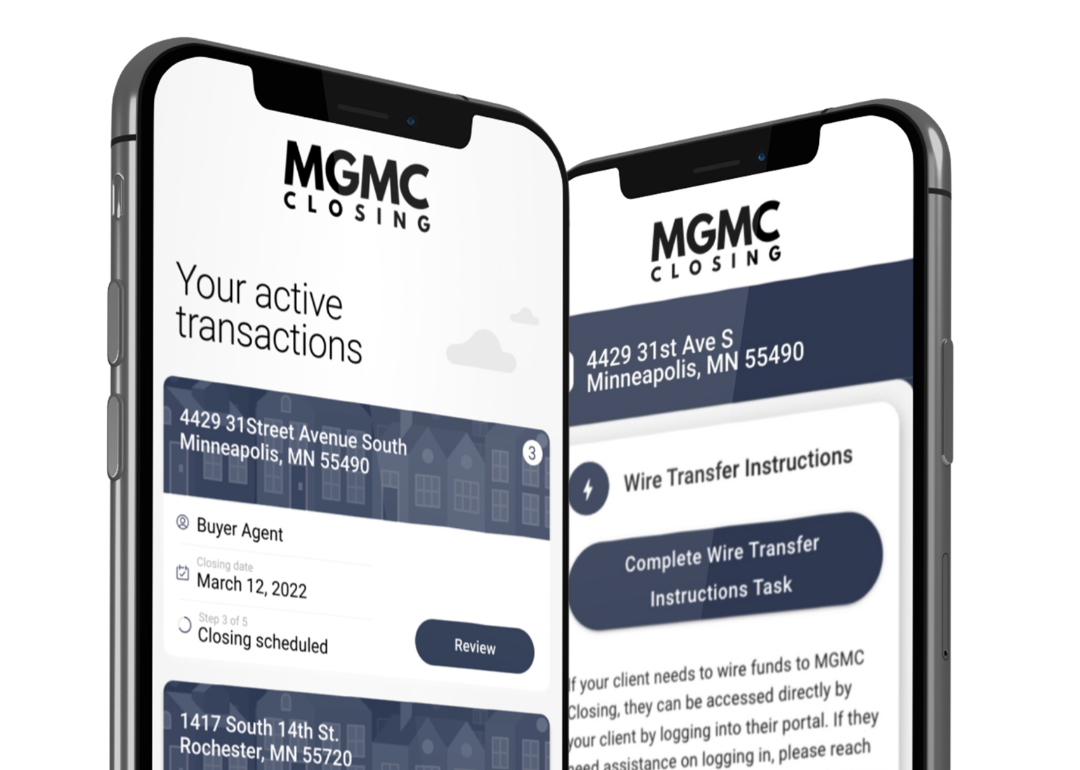
How CloseSimple Helps Title Companies Defend Against AI-Enabled Fraud
The tactics above are workflow problems more than technology problems, because they succeed by exploiting the moments a closing depends on human judgment under pressure. CloseSimple was built for title and escrow teams that want those moments to sit inside a workflow the fakes can't easily reach.
With CloseSimple, a title company can:
- Confirm the identity of buyers and sellers at intake, before any sensitive information or wire detail is released
- Send every closing message from your own web domain and a phone number unique to your local area, so an outside sender or cloned site stands out
- Deliver wire instructions only through authenticated portal access, never email or voice channels
- Collect sensitive documents inside a secure branded portal, closing off the AI-drafted phishing route
- Give clients one branded destination for the entire closing, so a cloned site or lookalike domain contradicts the pattern they know
- Trigger secure steps directly from SoftPro 360, ResWare, or Settlor APIs, so protection is built into the closing workflow
CloseSimple removes the workflow openings these attacks depend on, so a convincing fake has nowhere to land inside a closing. Schedule a demo today to see how CloseSimple can help your title company.

Related posts
Fraud Prevention
How Criminals Are Using Deepfakes to Commit Wire Fraud in Real Estate
.jpg?length=350&name=How%20to%20Catch%20Fraud%20at%20the%20start%20of%20the%20closing%20(1).jpg)
Fraud Prevention
Why wait till right before the closing to catch fraud?

Identity Verification
4 Identity Verification Failures That Put Title Companies at Risk of Impersonation Fraud
Resources
From a Month to a Second: Why Early Fraud Detection is No Longer Optional