
-1.png)
It usually starts with a phone call your team never wants to receive.
A buyer is anxious, asking if the wire instructions they were sent are real. They received them at the exact moment they expected something from you, and the email looked close enough to your normal pattern that they almost acted on it.
You check the file, and your first thought isn’t relief that they hesitated. It’s a concern about how easily the situation could have gone the other way.
This is the reality many title companies live with now.
Fraudsters have stopped using broad, sloppy tactics. They study your workflows, your timing, and your communication patterns. They know when your clients are overwhelmed and where the cracks in your process appear. Most importantly, they rely on the everyday gaps that feel harmless on the surface but create the perfect opening for someone impersonating your team.
5 Security Gaps in the Closing Process Fraudsters Love to See
Below are five of the most common gaps fraudsters exploit inside a closing process. Most teams recognize at least one. Some recognize all five. The good news is that once these gaps are clearly understood, they can be closed with strong workflows and the right systems behind them.
1. Communication Spread Across Too Many Channels
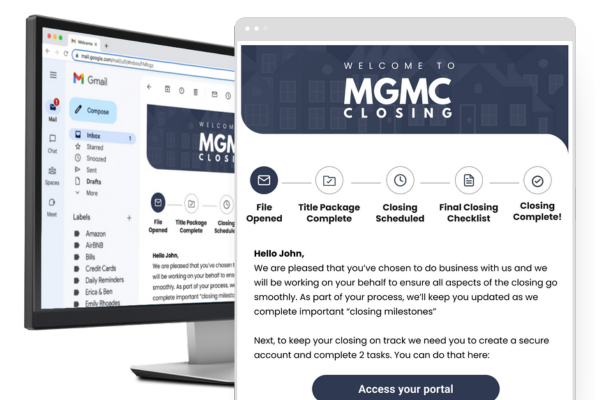
If your team uses email for one update, a text message for another, a PDF for something else, and a separate portal when documents are involved, clients struggle to recognize what is official. Fraudsters love this because it gives them room to mimic your patterns. They do not need to hack you to create confusion. They only need your clients to be unsure.
What creates this gap:
- Different tools for updates, documents, forms, and reminders
- Messages sent from multiple individual team members instead of a consistent source
- Clients receiving communication through whatever medium feels convenient in the moment
- No single, predictable place where buyers and sellers can confirm that something truly came from you
- Software vendors emailing updates or requests to your clients from their URL instead of your URL.
Why this matters: Clients who are stressed, unsure, or distracted are not reading header information or email domains closely. They are scanning for tone and timing. If the message feels like something your team, or a trusted partner would send, they trust it. The more channels and URL’s that are used during the closing, the easier it is for criminals to imitate one.
A better approach: Consistency is key. Create one branded, secure communication environment for the entire transaction. This starts with the look of your emails, extends to your text message updates, and includes whether you provide a single portal to capture and complete closing tasks. When every important update comes from a predictable place and in a consistent pattern, suspicious messages stand out immediately. You remove the guesswork and protect the client at the same time.
2. Document Exchange That Still Runs Through Email
Email is still the weakest link in most closing processes, not because your team mishandles it, but because every transaction involves multiple inboxes outside your control. A fraudster only needs one compromised inbox in the entire chain. That inbox might belong to a real estate agent who reused a password, a lender who clicked a malicious link, or a buyer who forwarded something to their personal email.
Once someone gains access to the inbox, they have:
- Full visibility into the file timeline
- Names, contact information, and signatures
- Draft documents they can manipulate
- Samples of your writing style
- Enough data to convincingly impersonate a party in the transaction
Why this matters: You cannot secure every inbox in the transaction. Even if your internal environment is well protected, fraudsters can slip in through anyone else involved. When documents with personal information move through standard email threads, the risk multiplies.
A better approach: Move document exchange into a secure, authenticated space. Clients should not be sending photos of their ID, income information, or personal details through unencrypted email threads. A secure portal lowers the risk for everyone, including your team, and removes the opportunity for criminals to gather information for impersonation.
3. Wire Instructions Delivered Without a Clear Validation Path
Wire instructions are the highest‑risk item in the entire closing process, yet many companies still send them in a way that leaves too much room for misunderstanding. Fraudsters study these patterns closely and insert themselves at the moment a buyer is expecting instructions.
This gap usually appears when:
- Instructions are sent as static PDF attachments
- Clients receive instructions before they have spoken directly with your team
- Multiple team members send communication instead of one consistent source
- Buyers are unclear whether instructions should come from you or their lender
- Instructions appear inside long, complex email threads
Why this matters: When a buyer receives two sets of instructions, they will often act on the first one they open. Fraudsters know the timing of closings well enough to send fake instructions that arrive before your real ones.
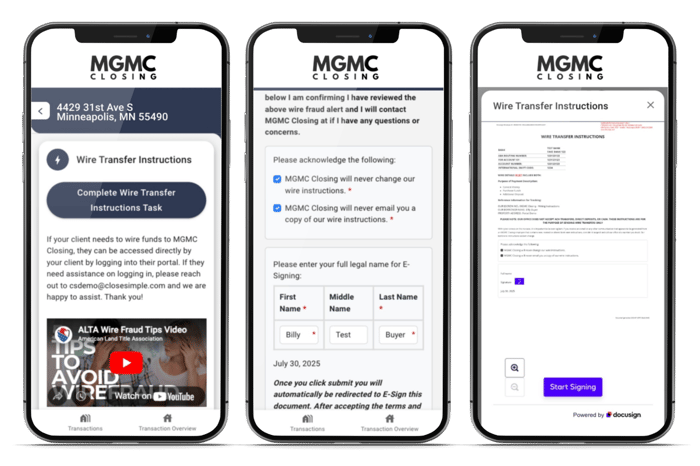
A better approach: Deliver wire instructions only inside a secure portal with built‑in verification and clear access controls. Instructions should not be forwardable or copyable. Buyers should not be able to open them without passing an authentication step. And most importantly, the instructions should never come through email.
4. Weak or Inconsistent Identity Verification
Identity verification tends to be one of the most outdated steps in the closing process. Many companies still rely on clients emailing photos of their driver’s license or answering a few basic questions on the phone. This gives fraudsters several easy opportunities to impersonate someone involved in the transaction.
Criminals routinely exploit these gaps when:
- Buyers or sellers send ID photos through email
- Identity checks rely on trust instead of verification
- Any party in the transaction forwards personal information to another party
- Instructions are given over the phone with no way to confirm the caller’s identity
- Contact information is taken from an agent or other third party
Why this matters: Identity is the foundation of the entire closing. If the wrong person gets access to sensitive information, the rest of the process becomes vulnerable. Fraudsters do not need advanced tools. They only need a moment when someone assumes the person they are speaking to is legitimate.
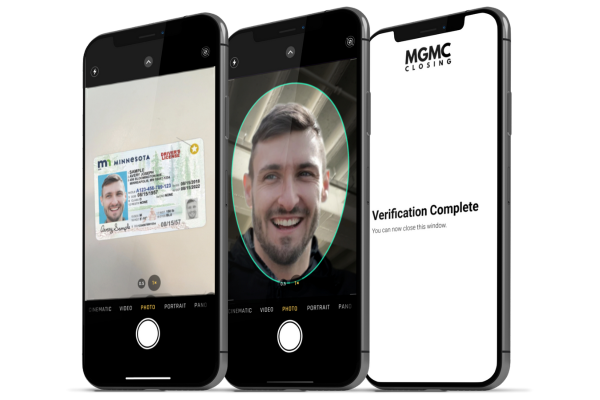
A better approach: Use identity verification that is built into the closing workflow itself. This prevents buyers and sellers from accessing documents, wire instructions, or personal information until their identity is confirmed. It also gives your team confidence that the person on the other side is who they claim to be.
5. Manual Steps and Disconnected Tools That Increase Human Error
People are skilled, but they are also overloaded. When workflows depend on manual steps, things slip. Fraudsters thrive in these moments because small inconsistencies make their messages harder for clients to question.
Human error grows when:
- Updates must be triggered manually
- Team members copy and paste content from templates
- Documents are uploaded into different portals based on preference
- Reminders, forms, and instructions come from separate systems
- Staff are managing a rush of end‑of‑month or seasonal volume
These inconsistencies are not the fault of your team. They happen because the process itself is fragmented. Even your best employees cannot maintain perfect consistency when juggling multiple tools.
Why this matters: Fraudsters watch for mismatched timing, unusual email addresses, and differences in formatting. They mimic these small mistakes, which makes their messages appear authentic.
A better approach: Use a system that automates routine steps and connects directly to your title production software. Automated workflows reduce inconsistency, flag unusual activity, and remove the need for individual staff members to remember every detail. You reduce risk and free your team to focus on the parts of the job that actually require human judgment.
Closing These Gaps Requires One Consistent Principle
Fraudsters thrive in confusion.
The safest title companies in the country have something in common. They no longer rely on scattered tools or unpredictable workflows. Instead, they give buyers, sellers, agents, and lenders one secure place for everything. One login. One workflow. One predictable experience.
When clients know exactly where instructions, forms, documents, and updates come from, fraudulent messages lose their power. The confusion disappears, and so does the opportunity for criminals to impersonate your team.
How CloseSimple Helps Title Companies Seal These Security Gaps
CloseSimple was created for title and escrow teams that want to replace risky, inconsistent communication with one secure, integrated system.
With CloseSimple, your team can:
- Send every update from the title company’s web domain, not ours, and from a unique phone number in their local area code.
- All closing tasks are done inside one branded portal
- Deliver wire instructions without using email
- Verify client identities before releasing sensitive information
- Collect documents securely without exposing inboxes
- Replace scattered point solutions with one unified workflow
- Trigger secure steps directly from SoftPro, Resware, or Settlor
- Give clients a consistent, easy‑to‑understand experience for the entire closing
Tags
Fraud Prevention

Related posts

Resources
The Advocate's Edge: Best Real Estate Closing Software for Attorneys
.png?length=350&name=122%20PM%20(1).png)
Resources
The Integated Technology Solution to Meet ALTA Best Practices
The CloseSimple Portal
[PRESS RELEASE] CloseSimple Launches Collaboration Portal to Help Title Companies Elevate the Closing Process
testimonial
Cynthia Blair on How CloseSimple Helped Her Company Regain Control by Reducing Vendors & Simplifying Processes